

How Manufacturers Are Overcoming CNC Programming Challenges with AI and Swiss CNC Machines
Swiss-style CNC machines have become a cornerstone of modern manufacturing, particularly for industries that demand high precision and complex part geometries. Medical device manufacturers, aerospace suppliers, electronics producers, and automotive companies rely on Swiss CNC technology to produce tight-tolerance components efficiently. While these machines offer significant advantages, manufacturers are also facing growing challenges related to programming complexity and workforce shortages. Fortunately, advances in artificial intelligence (AI) and CAM software are helping bridge the gap.
The Benefits of Swiss-Style CNC Machines
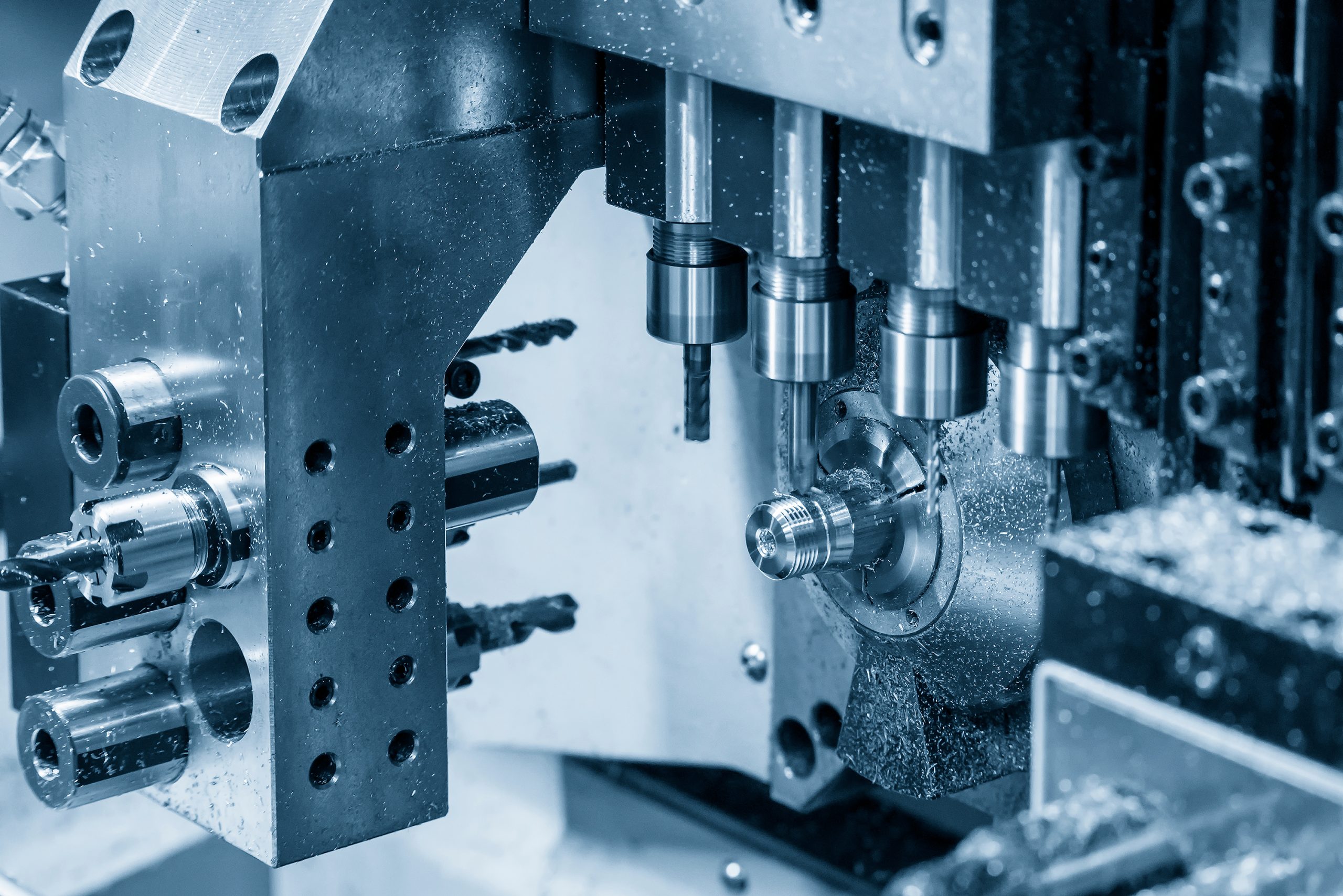
Swiss-style CNC machines are designed to machine small, intricate parts with exceptional accuracy. Unlike traditional lathes, Swiss machines support the workpiece close to the cutting tool through a guide bushing, reducing vibration and deflection during machining.
This design offers several benefits:
- Superior dimensional accuracy and repeatability
- Faster cycle times for complex parts
- Ability to perform multiple operations in a single setup
- Reduced secondary operations and handling
- Improved surface finishes on precision components
These advantages make Swiss machining ideal for high-volume production of complex parts where quality and consistency are critical.
The Challenge of G-Code Programming
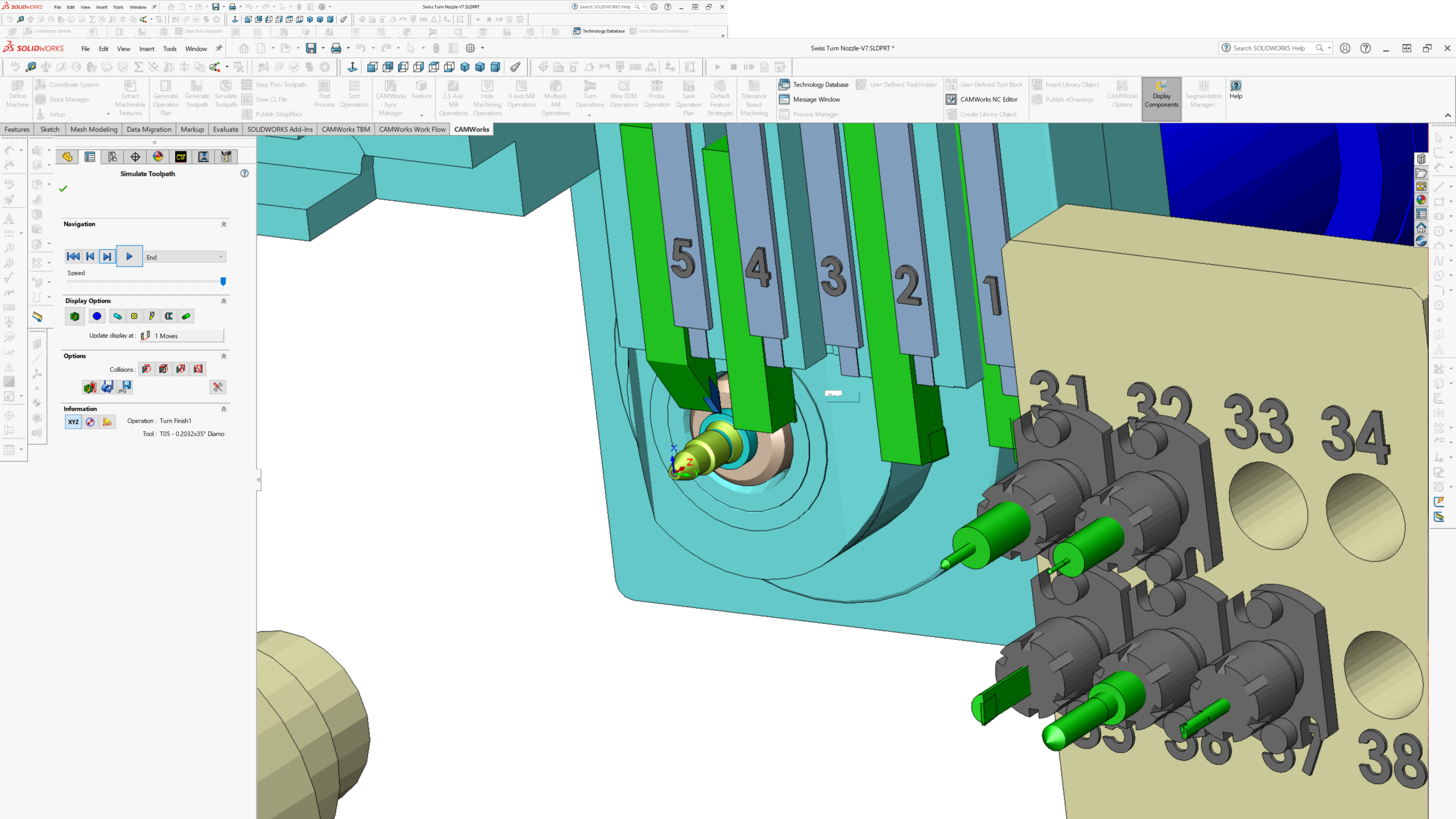
Despite their benefits, Swiss CNC machines are among the most difficult machine tools to program. Their multi-axis configurations, synchronized tool movements, and multiple machining channels require highly sophisticated G-code.
Programming a Swiss machine often involves:
- Coordinating multiple tools operating simultaneously
- Managing sub-spindles and guide bushing operations
- Synchronizing machine channels and timing events
- Preventing collisions in tightly packed work zones
- Optimizing toolpaths for maximum efficiency
Even experienced CNC programmers can spend hours or days developing and verifying programs for complex Swiss-machined components. Any programming error can lead to costly machine downtime, scrap parts, or tool damage.
The Growing Shortage of Skilled CNC Programmers

Manufacturers are also struggling with a shortage of experienced CNC programmers. As veteran machinists retire, many companies are finding it difficult to replace their expertise. Younger workers entering the industry often lack advanced Swiss machining experience, creating a significant skills gap.
The consequences include:
- Longer programming lead times
- Reduced manufacturing productivity
- Increased risk of programming errors
- Difficulty scaling production capacity
- Delays in onboarding new employees
For many shops, finding qualified Swiss CNC programmers has become one of the biggest barriers to growth.
How AI Automation is Transforming CNC Programming
Artificial intelligence is emerging as a powerful solution to these workforce and programming challenges. AI-powered manufacturing software can automate many of the repetitive and time-consuming tasks traditionally performed by programmers.
AI can help manufacturers by:
- Automatically recognizing part features
- Recommending machining strategies
- Selecting tools and cutting parameters
- Reducing manual programming effort
- Standardizing programming practices across teams
By leveraging AI, manufacturers can significantly reduce programming time while improving consistency and accuracy.
How CAMWorks Uses AI to Increase Programming Speed
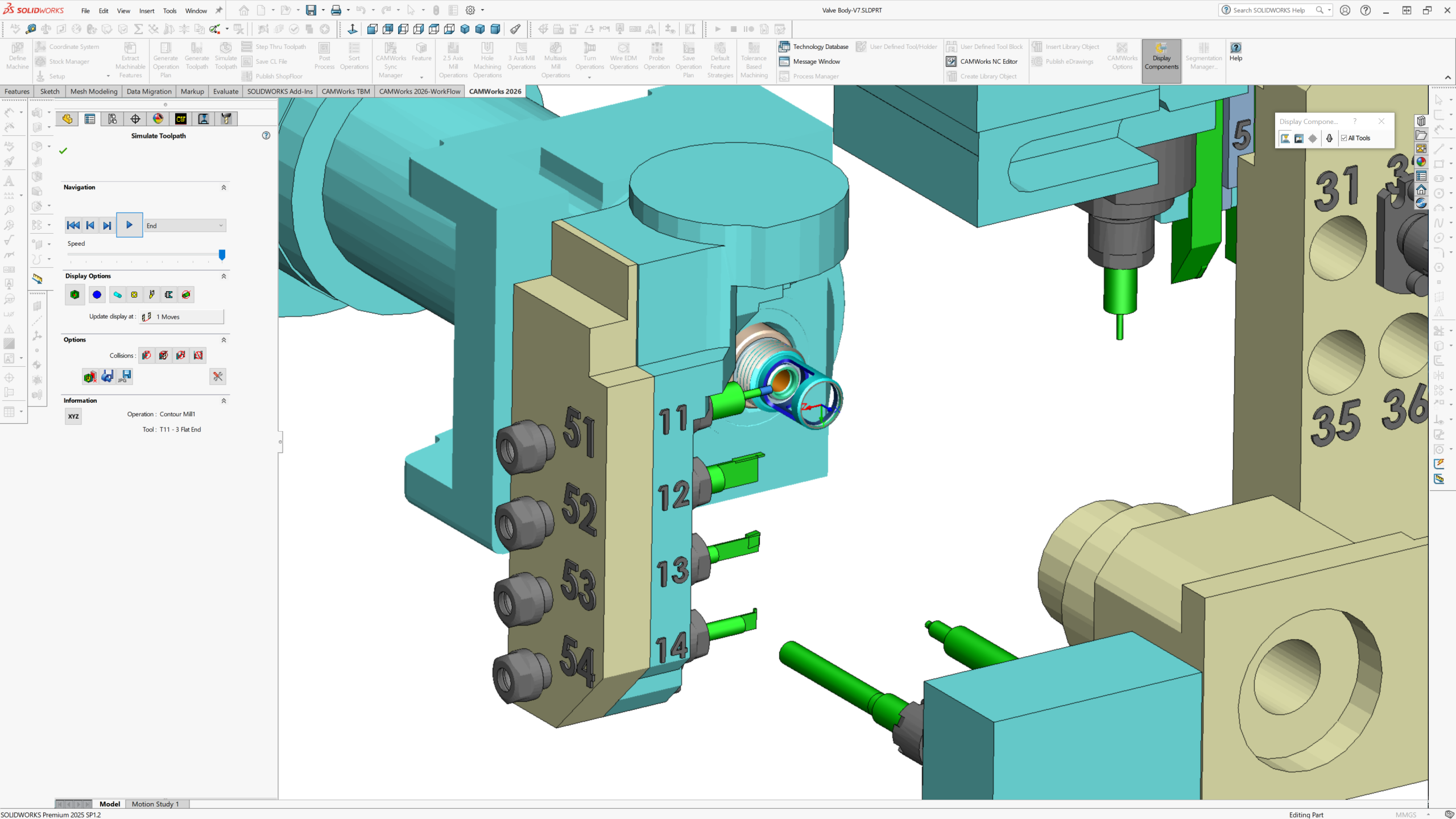
CAMWorks is one example of a CAM solution that incorporates AI-driven technology to streamline CNC programming. Its Knowledge-Based Machining (KBM) system captures and reuses proven machining strategies, allowing programmers to automate many programming decisions.
Using AI-powered automation, CAMWorks can:
- Identify machinable features automatically
- Apply predefined machining strategies based on part geometry
- Generate toolpaths faster with less manual input
- Reuse shop-floor best practices across multiple jobs
- Reduce programming time while maintaining quality standards
For manufacturers operating Swiss CNC machines, this technology helps address both programming complexity and labor shortages.
Conclusion
Swiss-style CNC machines continue to deliver unmatched precision and productivity for manufacturers producing complex components. However, the complexity of G-code programming and the shortage of skilled programmers remain significant challenges.
AI-powered solutions such as CAMWorks are helping manufacturers overcome these obstacles by automating programming tasks, increasing efficiency, and making advanced CNC programming more accessible. As manufacturing continues to evolve, AI-driven automation will play an increasingly important role in maximizing the value of Swiss CNC technology.
